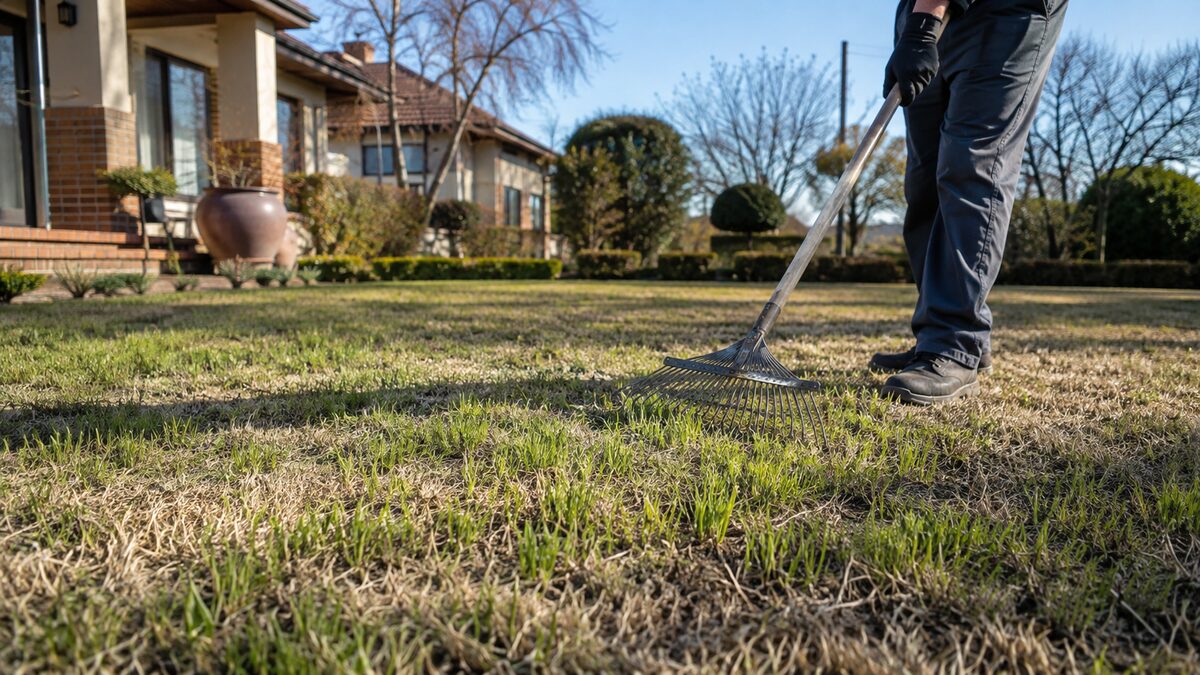
After a cold, dry Highveld winter, many Gauteng lawns look brown, thin or completely lifeless. That does not always mean the grass is dead. Warm-season grasses often slow down or go dormant in winter, especially after frost, and can recover once soil temperatures rise and consistent spring growth begins.
The key is to help the lawn recover without shocking it. Cutting too low, feeding too early or watering constantly can weaken already stressed grass.
If the rest of your property also needs attention, start with our broader South African spring garden preparation guide.
Why Gauteng Lawns Struggle After Winter
Gauteng winters are generally dry, with cold nights, frost in many suburbs and limited rainfall. Common warm-season grasses may lose colour and stop active growth. Shade, compacted soil, heavy foot traffic, pet activity, poor irrigation coverage and blunt mower blades can make the damage look worse.
Before treating the lawn, decide whether you are seeing normal winter dormancy or a deeper problem. Grass that is brown on top but firmly rooted may recover. Areas that pull away easily, smell rotten, remain bare after surrounding grass turns green or show spreading discoloured patches may need closer investigation.
1. Wait for Genuine Spring Growth
Do not rush into aggressive lawn work after one warm afternoon. Gauteng can still experience cold snaps near the end of winter. Wait until new green growth is visible and the lawn has started growing consistently.
Dormant grass repairs itself slowly. Heavy scarifying, close mowing or strong feeding can expose soil, damage crowns and leave space for weeds. Start gently and increase maintenance as the lawn responds.
2. Inspect the Lawn Before You Treat It
Walk the entire lawn and map the problem areas. Look for:
- Dry patches that sprinklers do not reach
- Hard, compacted soil along paths and play areas
- Deep shade beneath trees or against walls
- Water pooling in low sections
- Loose thatch and dead surface material
- Damage caused by pets, vehicles or frequent foot traffic
- Weeds taking over thin areas
A patchy lawn is not one single problem. Correcting the cause is more effective than repeatedly adding fertiliser or water.
3. Give the Lawn a Conservative First Cut
Once active growth returns, mow with a clean, sharp blade. Avoid scalping the lawn in an attempt to remove all the brown material at once. As a practical rule, remove no more than roughly one-third of the leaf height during one cut.
If the grass is long or uneven, lower the mowing height gradually over several cuts. A healthy cutting height leaves enough green leaf for photosynthesis, shades the soil and helps the roots recover.
4. Remove Loose Winter Material Carefully
Lightly rake out loose leaves, dead clippings and surface debris so that light, water and air can reach new growth. Do not tear aggressively into grass that is still dormant or weak.
Thatch is a dense layer of undecomposed stems and roots between the green grass and the soil. A small layer is normal, but a thick layer can interfere with water movement. Scarifying may help a heavily thatched lawn, but it should be done only when the grass is actively growing and capable of repairing itself.
5. Aerate Compacted Areas
Compacted soil limits oxygen, water and nutrient movement. It is common near gates, washing lines, children’s play areas and routes used by pets or garden teams.
Use a garden fork or suitable lawn aerator to open compacted sections once the soil is slightly moist, not waterlogged. Focus on problem zones instead of disturbing the entire lawn unnecessarily. Reducing repeated traffic over the same route will help the improvement last.
6. Repair Bare and Thin Patches
Correct the cause first. Fix irrigation coverage, relieve compaction, manage shade or redirect traffic before installing new grass.
Depending on the existing grass, size of the area and local conditions, repairs may use matching sod, plugs or an appropriate seed. Do not mix grass types without understanding how their colour, texture and growth habits will differ. A reputable Gauteng nursery or lawn specialist can help identify the existing grass and the most suitable repair method.
7. Feed Only When the Lawn Can Use It
Fertiliser is not a cure for every brown lawn. Apply it only after active growth has started and water is available. Choose a product labelled for lawns and follow the manufacturer’s rate exactly. More product does not mean faster recovery and can burn grass or contribute to nutrient runoff.
If the lawn repeatedly struggles despite correct maintenance, a soil test can provide better direction than guessing.
8. Water Deeply, Not Constantly
Test the irrigation system before hot weather arrives. Repair leaks, clear blocked nozzles and adjust sprinkler heads so that they water the lawn rather than paving or walls.
Early-morning watering generally reduces evaporation and gives the lawn time to dry during the day. Aim for watering that moistens the root zone, then allow the surface to begin drying before watering again. Adjust the schedule for rainfall, soil type, shade, grass species and any municipal restrictions. Constant shallow watering encourages shallow roots and wastes water.
9. Control Weeds Without Damaging New Growth
Weeds quickly occupy thin spring lawns. Remove small weeds before they flower and spread seed. Hand removal is often the safest option for isolated weeds, particularly around children and pets.
If a treatment is necessary, identify the weed and use only a product suitable for the grass type and growth stage. Never assume one herbicide is safe for every lawn, and avoid blanket spraying when targeted control will do the job.
Build a Maintenance Rhythm for the Growing Season
Recovery is not a once-off event. Consistent mowing, edging, weed control, irrigation checks and light seasonal care will keep the lawn improving. During Gauteng’s warmer, wetter months, a lawn can become untidy surprisingly quickly. Our comparison of bi-weekly and monthly garden maintenance can help you choose a practical service frequency.
Healthy recovery happens through steady new growth, not an instant cosmetic fix.
Get Your Gauteng Lawn Ready for Spring
A dry winter lawn can often recover when the causes of stress are addressed early. Start with inspection, mow conservatively, remove loose debris, relieve compaction, repair bare sections and match feeding and watering to active growth.
Sola Gratia Garden Services provides reliable lawn cutting, edge trimming, garden clean-ups and ongoing maintenance for homes and businesses. Request a garden-service quote and tell us about your lawn, property and preferred maintenance frequency.